What Freedom Actually Is
From someone who had to learn the hard way.
It’s the Fourth of July weekend. And everywhere you go, you see this word: Freedom. Freedom that comes with fireworks, flag-waving, and speeches about liberty and independence.
But this year feels different. There’s a lot of worry out there, from a lot of directions, about whether freedom is as secure as we thought. People are paying attention in a way they maybe weren’t before.I think that’s actually worth something. Because the truth is, freedom is easy to take for granted until something threatens it — and the moment you feel that threat, even distantly, even abstractly, it changes how you hold the concept. It becomes personal. Urgent. Real in a way it wasn’t before.
I know something about that. Not from a political angle; I’ll leave that to others. But from twenty years inside an organization that controlled what I read, what I thought, who I talked to, and when I was allowed to cross the road. When I finally got out, I learned something about freedom that I couldn’t have understood any other way: the most important kind isn’t guaranteed by any law or policy. It lives inside you. And it can be taken quietly, gradually, without a single edict, if you’re not watching for it.
A little context
When I was in Scientology, freedom was something we talked about all day, but something I didn’t experience in reality. For ten years, I lived and worked at a facility surrounded by chain-link fencing topped with razor wire, with guards and a tunnel built under the road connecting the two halves of the property so nobody ever had to cross the property line to get between buildings. And when I was in Clearwater, even though I no longer had to deal with chain-link fences and barbed wire, I certainly had to deal with the mental chains.
Throughout it all, my time belonged to the organization — even down to what I read. In Scientology, you don’t just read; you “clear” every word you don’t immediately understand, looking it up until the meaning is certain, the idea being that a misunderstood word is the root of all confusion.
And who had time to read for pleasure? First of all, you’re too tired to do that after working 18 hours. Secondly, there’s an undercurrent of “Why are you reading fiction when there’s a planet to clear?” Or more often, “Why are you reading this when L. Ron Hubbard wrote fiction, too? Why haven’t you finished reading his books?” Control, control, control.
My friendships existed inside the organization. My sense of purpose came from the organization. Even my understanding of who I was had been built around what the organization needed me to be. You don’t notice the weight of that while you’re carrying it. It’s just the weight of your life.
My first afternoon of utter contentment
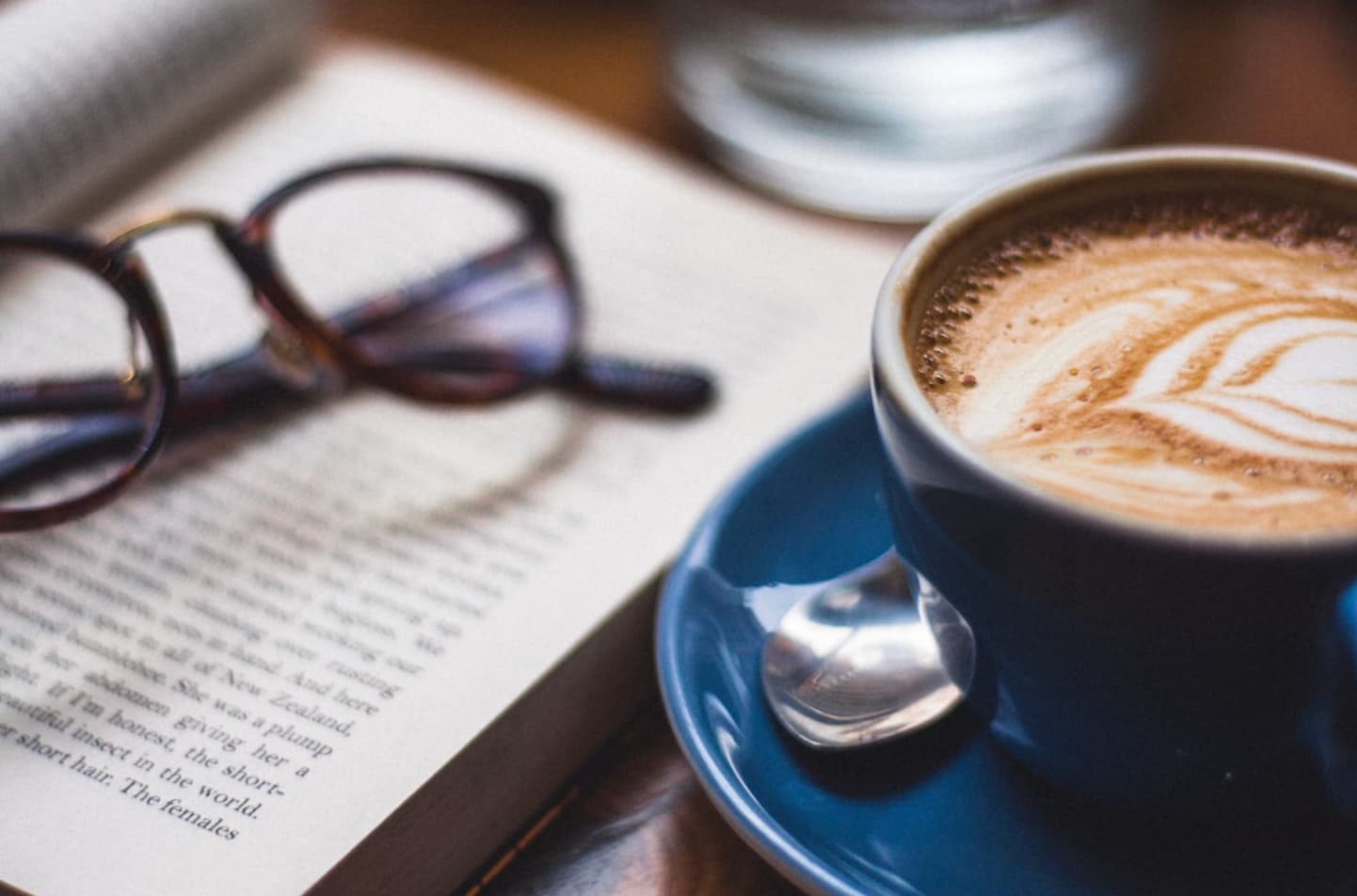
After I got out of the cult, one of the first things I did — after sleeping for weeks — was take an afternoon by myself in downtown Lakeland. It’s where I still live: a small city with a small-town feel, quiet streets, locals going about their days. I walked into a shop and bought a novel. Just because I wanted to and the cover looked interesting. Then I found a coffee shop, ordered a cappuccino, sat down, and read.
Nobody asked me why I was reading fiction. Nobody needed anything from me. Nobody was watching.
The feeling crept up gradually; it wasn’t a thunderclap moment. I was a few pages in when I noticed I was just reading. Not performing reading, not checking my comprehension against some external standard, not managing my attention in relation to anything outside the page. Just reading, the way I read as a child when reading was an adventure, a joy, something with no rules attached.
And I smiled, probably looking a little goofy. Then a small sigh, and a quiet tear I didn’t bother stopping. Somewhere in that ordinary moment the realization settled in: I’d done it. I’d gotten out and survived. This cappuccino, this novel, this unremarkable afternoon — it was mine.
What was actually different
The freedom I felt that afternoon wasn’t about gates or razor wire, though I’d dealt with both of those. It was subtler and in some ways more fundamental.
For twenty years, my thoughts had been filtered through a framework handed to me and reinforced constantly as the only true way to understand the world. When my instincts conflicted with the doctrine, my instincts were the problem. When something didn’t make sense to me, my comprehension was the problem. Hubbard was infallible. The text was never wrong. The reader was always the variable.
Sitting in that coffee shop, reading whatever I wanted, thinking whatever I thought about it, felt like the first time my mind belonged to me again. That’s what cracked open that afternoon. Quietly, without drama. Just a woman with a cappuccino and a book, beginning to feel like she was getting herself back.
What came next
Freedom is also frightening, it turns out.
Twenty years of having your choices managed leaves you genuinely uncertain about how to choose. The first big decision I faced on my own was finding a job — no traditional resume, no work history that translated easily, no clear idea of where to start. So I started anyway. Got knocked back a few times. Eventually landed a holiday help position, a foot in the door, the kind of beginning that requires swallowing your pride and building from scratch.
It was the first job I chose, and the first money I earned for myself in a long time. The first small proof that the life waiting on the other side of those fences was actually available to me.
Rebuilding isn’t dramatic. It’s one small step, then another, then another, until one day you look up and realize you’ve built something that’s genuinely beautiful — and genuinely yours.
For this weekend
Whatever you’re doing this Fourth of July, I hope you get a moment that feels like that coffee shop afternoon. The quiet kind of freedom. The personal kind. The miracle of going where you want, reading what you want, thinking what you actually think, with nobody watching.
And if you’ve had your freedom taken from you at some point — by a group, a relationship, a system — I hope you’re somewhere on the other side of that. Or moving toward it. Because there’s an ordinary afternoon out there with your name on it. A coffee shop, a book, something warm in a cup. Nowhere to be. Nobody watching.
That’s something I wish for you more than anything else this holiday weekend.
Happy Fourth of July.